
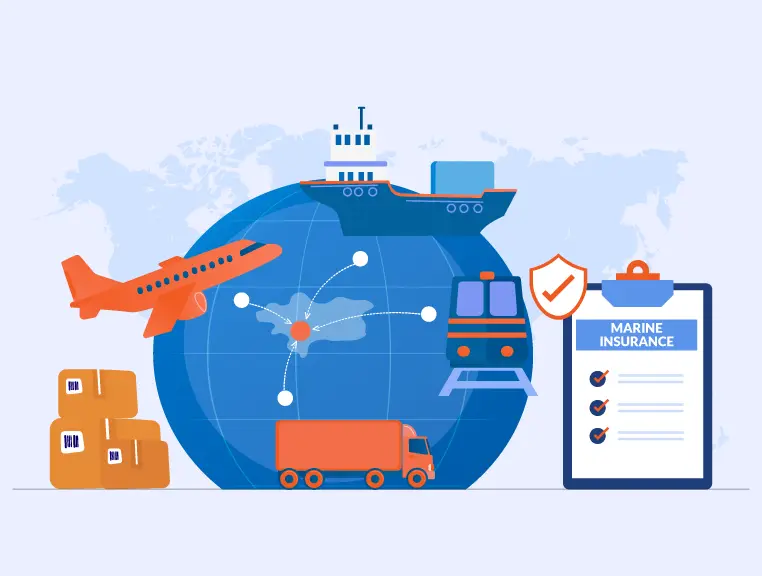



To file a Marine Insurance claim in India, notify your insurer and the carrier immediately after discovering loss or damage, preserve the damaged cargo for inspection, get a surveyor appointed within a few days, and submit the claim form along with the invoice, packing list, bill of lading, survey report, and policy copy. Most insurers […]


How Marine Insurance Premiums Are Determined – Concepts & Factors
Every exporter, importer, or logistics manager who has ever compared two Marine Insurance quotes has asked the same question: why does one policy cost more than another for what looks like the same shipment? The honest answer is that Marine Insurance pricing is never a single number pulled from a rate card. It is the […]
Marine Insurance Warranties – Express, Implied & Innominate Terms
Every marine insurance policy rests on a promise. Not just the insurer’s promise to pay a claim, but the policyholder’s promise to behave in certain ways during the voyage. Marine insurance law in India calls these promises warranties, and they sit at its very heart. Most exporters and importers only discover what a warranty actually […]
Marine Insurance Clauses – Complete Glossary
Every marine insurance policy is really a bundle of clauses stitched together. The premium you pay, the coverage you get, and – most importantly – the claim you can recover all trace back to specific wording buried inside the policy document. Yet most exporters, importers, and even seasoned logistics managers skim past these clauses until […]
Marine Insurance Coverage – What’s Covered & Excluded
Quick Answer Marine Insurance Coverage protects cargo against accidental loss or damage during transit by sea, air, road, or rail – from fire, collision, sinking, theft, and natural disasters. It does not cover inherent vice, wear and tear, delay, improper packing, or willful misconduct unless specifically endorsed. The exact scope depends on which Institute Cargo […]
Types of Marine Insurance Policies – Complete Guide
Quick Answer There are six core types of marine insurance policies in India: Open Cover, Open Policy (Floating Policy), Specific Voyage Policy, Time Policy, Blanket Policy, and Sales Turnover Policy (STOP). Businesses also buy specialised covers such as Contingent Cargo Insurance, Special Cargo Insurance, and Air Freight/Air Cargo Insurance depending on shipment frequency, cargo type, […]
What is Marine Insurance – The Complete Guide
Introduction Every year, thousands of shipments leave Indian ports by sea, air, and road. Somewhere between the factory floor and the buyer’s warehouse, cargo faces fire, theft, flooding, container mishandling, and accidents. Marine insurance is the financial safety net that protects goods during this journey. This guide explains what marine insurance is, how it works […]
Marine Transport Insurance Trends for Indian Exporters (Sea & Air)
Quick Summary Table: Key Trends in Marine Transport Insurance for Indian Exporters Trend Category Description Impact on Indian Exporters Digitalization Increased adoption of online platforms for policy issuance, claims management, and data analytics. AI/ML for risk assessment. Faster policy procurement, streamlined claims, better risk insights. Requires adapting to digital processes and potentially new data submission […]
Protecting Cargo and Beyond is the Scope of Marine Insurance
Individuals and businesses engaged in trade are exposed to numerous risks, including cargo theft, damage, accidents, and natural calamities during transit. These unexpected risks can cause significant financial losses and disrupt the supply chain. Marine insurance is crucial in safeguarding cargo, vessels, and other maritime assets from these potential risks. Marine insurance has a long […]
Marine Insurance vs. Freight Insurance: What’s the Difference?
Marine and freight insurance are essential for shipping, logistics, and transportation businesses. Global trade and shipping of goods expose businesses to various risks and unpredictable conditions. Having adequate insurance ensures protection against financial losses, improves cash flow, and helps businesses comply with contractual requirements and trade regulations. However, businesses need to understand the difference between […]